Agreed Value Insurance
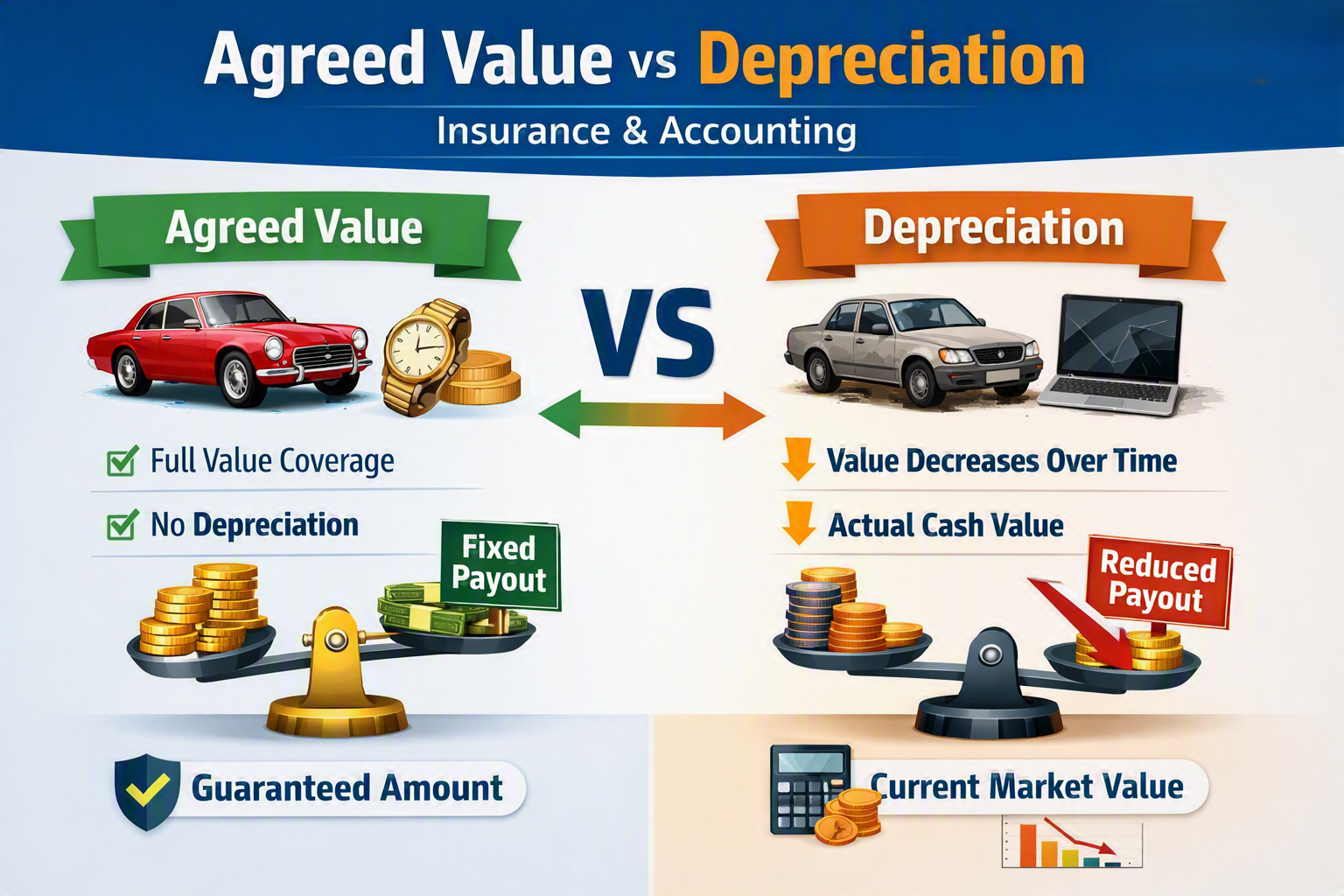
Agreed Value vs Depreciation: Insurance and Accounting. They serve very different purposes. In simple terms, one helps decide how much money you receive after a loss, while the other helps show the true cost of using an asset over time in business accounts. This article explains both ideas in everyday language so anyone can follow them.
Agreed Value vs Depreciation
In accounting, depreciation is the way a business spreads the cost of a long-lasting item across the years it is used. Think of a delivery van bought for £20,000. The van will not last for ever. It will wear out, become old-fashioned or need replacing. Instead of showing the full £20,000 as a cost in the year of purchase, the business writes off part of that cost each year. This gradual writing-off is called depreciation.
There are two common methods. The straight-line method takes the same amount each year. If the van is expected to last five years and then be worth nothing, the business charges £4,000 every year. The reducing-balance method charges a higher amount in the early years and smaller amounts later. Both methods reduce the book value of the asset on the balance sheet. Book value is simply the original cost minus the total depreciation charged so far.
The main reason for depreciation in accounting is to match costs with the periods that benefit from the asset. It also stops the accounts from showing an asset as still worth its full purchase price when it is clearly older and less useful. Depreciation is a non-cash expense. No money leaves the bank when the accountant records it; it is only a paper entry.
Benefits of Agreed Value
Insurance looks at depreciation in a different light. When you claim for a lost or damaged item, the insurer usually wants to put you back in the same financial position you were in just before the loss. This is called the principle of indemnity. Because most things lose value over time, the insurer may reduce the payout to reflect that loss of value.
Depreciation in Insurance
For example, if your five-year-old laptop was stolen and a similar second-hand model now costs £300, the insurer will not pay the original £800 purchase price. They will pay around £300, the current market value. The difference is the depreciation that has already taken place through use and age. Insurers often use standard depreciation tables or look at second-hand prices to decide the figure.
This approach can surprise people. Many policyholders expect the full cost of a brand-new replacement. Under a normal market-value policy they do not receive that. The insurer’s job is not to give you a better item than the one you lost; it is to compensate you for the actual value of what you had.
Agreed Value Policies in Insurance
To avoid arguments about depreciation at claim time, some insurance policies use an agreed value. At the start of the policy the insurer and the customer agree a fixed sum that will be paid if the item is totally lost or destroyed. That sum is written into the policy schedule.
Agreed value is common for classic cars, high-value jewelry, works of art and some specialist equipment. Once the figure is agreed, the insurer cannot later say the item has depreciated and pay less. If the classic car is written off, the agreed amount is paid, even if similar cars are currently selling for less. The customer gains certainty. The insurer gains a clear limit on what they may have to pay.
Agreed Value policy benefits
Agreed value policies usually cost a little more because the insurer takes on the risk that the agreed sum may be higher than the true market value at the time of a claim. Regular valuations are often required so the agreed figure stays realistic. If the customer fails to update the valuation, the insurer may still pay the last agreed amount, but disputes can arise if the true value has changed dramatically.
Side-by-Side Comparison Depreciation formula in insurance
The biggest difference is purpose. Accounting depreciation spreads cost over useful life so that profit is measured fairly. Insurance depreciation (or the use of agreed value) decides the size of a claim payment. Accounting looks backward and forward over the life of the asset. Insurance looks only at the moment of loss.
In accounting the method is chosen by the business, within the rules of accounting standards. In insurance the method is set by the policy wording. One policy may use market value and apply depreciation; another may use agreed value and ignore depreciation for total losses.
Book value in the accounts is rarely the same as the amount an insurer will pay. A machine may still have a book value of £10,000 after several years of depreciation, yet its market value for insurance purposes could be only £4,000. Conversely, an agreed-value classic car may be insured for £50,000 while its book value, if any, is much lower because it is an old asset.
Tax treatment also differs. Accounting depreciation is adjusted for tax purposes in many countries; tax authorities often have their own capital-allowance rules. Insurance claim payments are generally not taxable if they simply restore the value of a lost asset, although any profit element can be.
Why the Distinction Matters in Practice
Business owners sometimes confuse the two ideas. They may look at the book value of an asset and assume that is the amount their insurance will pay. When a claim is settled for a lower market value they feel short-changed. Understanding the difference prevents that disappointment.
Choosing the right type of insurance cover is another practical point. For everyday office equipment and vehicles that lose value quickly, market-value cover with depreciation is usually enough and cheaper. For rare or appreciating items, agreed value gives peace of mind. The extra premium is often worth the certainty.
Accountants and insurance brokers can help by talking to each other. When a business buys an expensive asset, the accountant records it and starts depreciating it. At the same time the insurance schedule should be checked to make sure the sum insured is realistic. If the asset is unique, an agreed-value endorsement may be sensible.
Agreed Value Calculation Example
Imagine a cafe buys a coffee machine for £5,000. In the accounts the machine is depreciated over five years at £1,000 a year. After three years the book value is £2,000. If the machine is destroyed by fire and the policy is on a market-value basis, the insurer may pay only £1,500 because second-hand machines of that age sell for that price. The cafe receives £1,500, not the £2,000 book value and not the original £5,000.
Now suppose the same cafe owns a signed photograph of a famous chef, valued at £3,000. They take out an agreed-value policy for that amount. If the photograph is stolen, the insurer pays £3,000 even if similar photographs are currently selling for less. The accounting records may show the photograph at a lower book value, but the insurance payment is fixed by the agreed figure.
A third example is a company car. Accounting depreciation reduces its book value steadily. Motor insurance on a market-value basis will pay the current used-car price if the vehicle is written off. An agreed-value classic-car policy would pay the per-agreed sum instead.
Machinery insurance example

One frequent mistake is thinking that depreciation in the accounts reduces the insurance payout. It does not. The two systems are separate. Another mistake is believing that an agreed-value policy somehow changes the accounting treatment. It does not; the accountant still depreciates the asset according to normal rules.
Agreed Value calculation example
People also sometimes expect “new for old” cover on every policy. New-for-old policies do exist, especially for household contents, and they reduce or remove the effect of depreciation. They are not the same as agreed-value policies, which fix a specific sum rather than promising a brand-new replacement, unless the machinery is less than 5 years with appreciation clause due to currency fluctuation. A living example in Malaysia. Aa machinery with purchased price of Rm 100,000.00. After used for 2 years it was burnt down, the insurer paid the insured of RM130,000.00 due to the Japanese yen appreciation.
Keeping Both Systems Working Smoothly
Review asset values regularly. Update the insurance schedule when new equipment is bought or old items are disposed of. Keep valuation certificates for agreed-value items. In the accounts, choose a depreciation method that reflects actual wear and tear as closely as possible. Straight-line is simple and widely used; reducing-balance may suit assets that lose value quickly in the early years.
Talk to both your accountant and your insurance adviser at least once a year. A short conversation can prevent large gaps between book value and insured value. Keep clear records of purchase dates, costs and any professional valuations. These records help both the year-end accounts and any future insurance claim.
Policyholder Perspective
Agreed value and depreciation are tools that serve different masters. Accounting depreciation spreads cost and measures profit fairly. Insurance depreciation, or the decision to replace it with an agreed value, decides how much money changes hands after a loss. Once the distinction is clear, both systems become easier to manage. Business owners who understand the difference make better choices about cover, keep more accurate books and face fewer surprises when a claim arises. Simple awareness is the best protection against confusion.