Why Rental Clause & Debris Removal Matter in Fire Insurance
Why Rental Clause & Debris Cover Matter in Fire Insurance? When a fire damages a house, the loss is more than just burnt walls and furniture. Families may lose their place to live, and owners may lose rental income. On top of that, cleaning up the debris can cost thousands. That is why fire insurance policies often include two important parts: the rental clause and removal of debris cover.This article explains these terms in simple language, showing why they are vital for both homeowners and tenants.
Rental clause explained
- A rental clause is a promise in the fire insurance policy that protects either:Homeowners (landlords) → If their house is rented out and a fire makes it unlivable, the insurance pays for the lost rental income.
- Tenants → If they rent a house and a fire forces them to move, the insurance pays for the cost of renting another place temporarily.
Think of it as a safety net for income or shelter.
Why Rental Clause Is Important

Why Rental Clause & Debris Cover Matter in Fire Insurance
- For Homeowners
- Imagine you rent out your house for RM1,500 per month.
- A fire damages the kitchen and living room.
- The tenant cannot stay until repairs are done.
- Without insurance, you lose months of rental income.
- With a rental clause, the insurer pays you the lost rent.
- For Tenants
- Imagine you rent a flat.
- A fire breaks out in the building.
- You must move out and rent another place.
- Without insurance, you pay double — rent for the damaged flat and rent for the new one.
- With a rental clause, the insurer covers the extra cost.
In short, the rental clause ensures no one is left financially stranded after a fire.
Debris removal insurance
What Is Removal of Debris Cover?
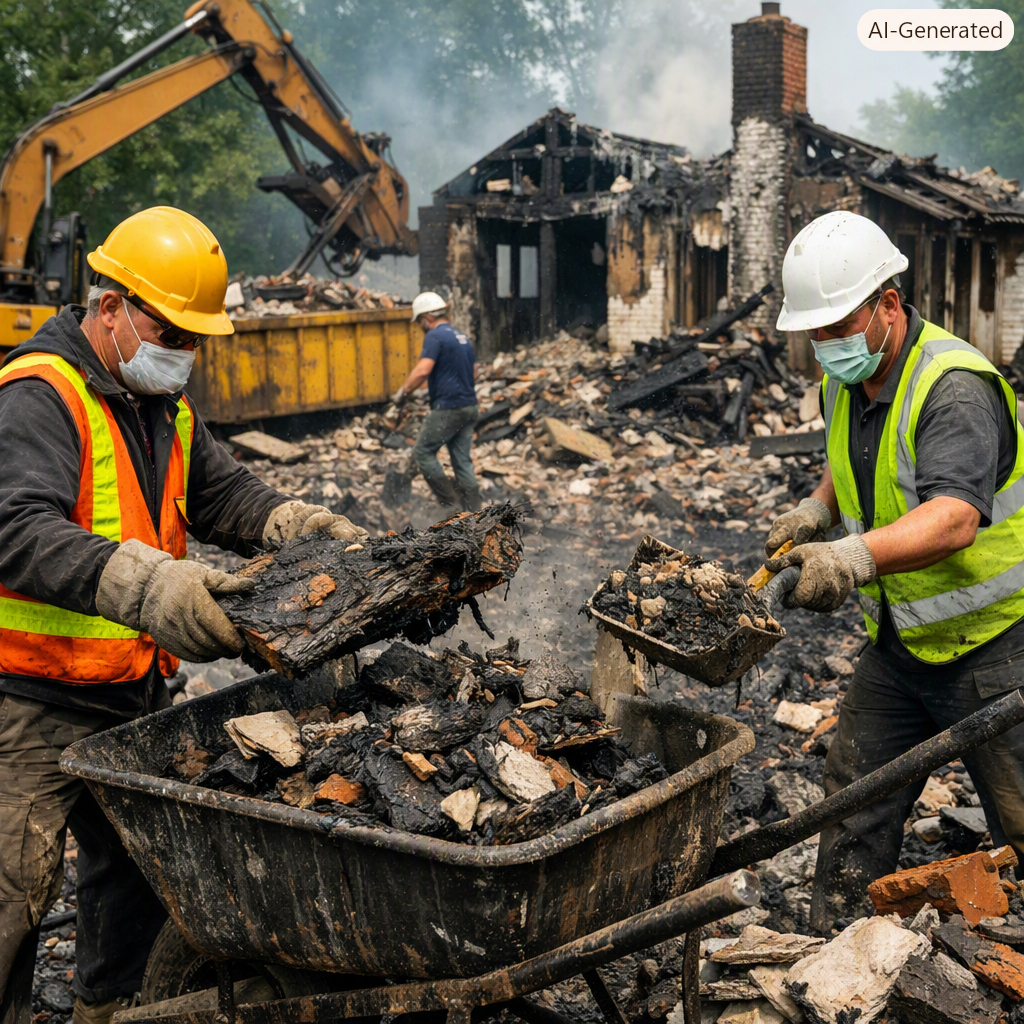
After a fire, the house is not just damaged — it is full of burnt wood, broken bricks, and ash. This debris must be cleared before repairs can start.
Debris removal is expensive. Contractors may charge thousands to safely remove and dispose of the waste. Fire insurance policies often treat this as a separate sum insured, meaning it has its own budget apart from the main building coverage.
Why Separate Sum Insured for Debris Removal Matters
- Repairs cannot start until debris is cleared.
- Costs are high → Sometimes 10–15% of the total claim.
- If not covered separately, debris costs eat into the main building coverage, leaving less money for actual repairs.
- With separate coverage, you get full repair funds plus extra for cleanup.
Example:
- Fire damage repair = RM100,000
- Debris removal = RM15,000
- If debris is not separately insured, you only get RM100,000 total, meaning repairs suffer.
- If debris has its own sum insured, you get RM115,000 (RM100k for repairs + RM15k for cleanup).
Layman Analogy
Think of debris removal like cleaning up after a big party. You cannot redecorate until the mess is cleared. If you don’t budget separately for cleanup, you end up short on money for the actual improvements.
Combined Importance
Together, the rental clause and debris removal cover make fire insurance complete:
- Rental clause → Protects income and shelter.
- Debris removal → Ensures cleanup and smooth repairs.
Without them, homeowners and tenants face hidden costs that can be more painful than the fire itself.
Friendly Key Points
- Fire insurance is not just about rebuilding walls.
- Rental clause protects income and temporary housing.
- Debris removal cover ensures repairs are not delayed.
- Both should be clearly included in your policy.
Conclusion
Fire insurance is more than a piece of paper. It is a promise to help families and owners recover from disaster. But that promise only works if the policy covers rental clauses and debris removal as a separate sum insured.
For homeowners, it means steady income even when tenants cannot stay. For tenants, it means not paying double rent. For everyone, it means faster cleanup and smoother repairs.
When buying fire insurance, always check these clauses. They may look small in the policy, but they make a big difference in real life.
Frequently Asked Questions (FAQ)
1. What is a rental clause in fire insurance?
A rental clause is a part of the fire insurance policy that protects either the homeowner or tenant.
- For homeowners, it pays for lost rental income if the house cannot be rented after a fire.
- For tenants, it covers the cost of renting another place if their home is damaged.
2. Why is the rental clause important for homeowners?
Without a rental clause, homeowners lose income when tenants cannot stay after a fire. With it, the insurance company pays the rent that would have been collected, keeping finances stable.
3. Why is the rental clause important for tenants?
Tenants may need to move out and rent another place after a fire. The rental clause ensures they don’t pay double rent — it covers the cost of temporary housing.
4. What is debris removal in fire insurance?
Debris removal means cleaning up burnt wood, bricks, and ash after a fire. It is costly and must be done before repairs can start. Fire insurance often includes this as a separate sum insured.
5. Why should debris removal have a separate sum insured?
If debris removal is not insured separately, its cost reduces the money available for repairs. With a separate sum insured, you get full coverage for both cleanup and rebuilding.
6. How do rental clause and debris removal work together?
Rental clause protects income and shelter, while debris removal ensures cleanup and repairs. Together, they make fire insurance complete, covering both financial loss and practical recovery.
- Rental clause importance → Protects homeowners’ rental income and tenants’ temporary housing costs after a fire.
- Debris removal coverage → Ensures cleanup costs don’t reduce repair funds.
- Separate sum insured → Keeps debris removal and building repair budgets independent for full protection.
- Homeowner benefit → Maintains steady income even when tenants can’t stay.
- Tenant benefit → Prevents double rent payments during temporary relocation.
- Complete fire insurance → A good policy should include both rental clause and debris removal cover.
- Financial peace of mind → These clauses help families recover faster and avoid unexpected costs.