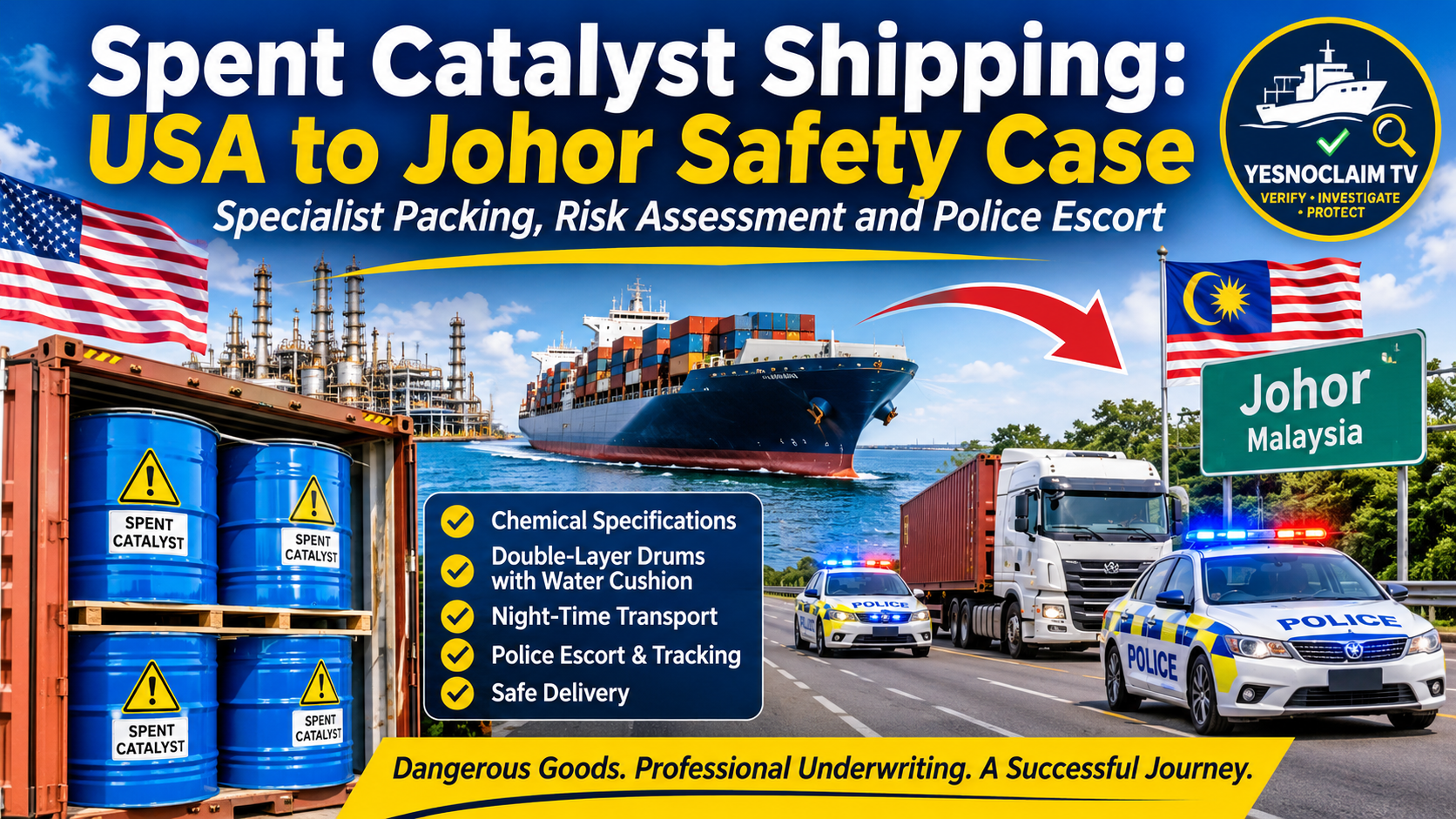
Spent Catalyst Shipping: 6 Marine Cargo Insurance Lessons
Around 6 pm one evening, an email arrived requesting marine cargo insurance for an unusual shipment: spent gamma-alumina catalysts, previously used in the oil and gas industry, travelling from the United States to Pengerang, Johor, Malaysia.
This was clearly not an ordinary consignment. Spent catalyst shipping involves materials that can still carry hazards long after they leave the refinery. The underwriting question was not just “yes or no” but “what exactly are we insuring, and what must happen to keep it safe?”
Why Spent Catalyst Shipping Is a High-Risk Cargo
Why Are Spent Gamma-Alumina Catalysts Dangerous?
Gamma-alumina catalysts are widely used in petroleum refining and petrochemical processes. Their porous structure gives them a large surface area for chemical reactions.
When their useful life ends, they are removed from production, but “spent” does not mean “harmless.” Residual oils, hydrocarbons, sulphur compounds and other contaminants can remain trapped inside the material. Depending on composition and condition, these residues can create hazards during storage, handling and transport, including:
- Heat generation or self-heating
- Release of toxic or hazardous gases
- Fire risk
- Unwanted reactions on contact with air or moisture
The exact danger depends on the chemical specification of the material. Treating every spent catalyst as ordinary industrial waste would be a serious underwriting mistake.
Step One: Finding the Right Freight Forwarder
My first priority was a freight forwarder with real experience in dangerous and potentially flammable industrial spent catalyst cargo. Not every forwarder will take on spent catalysts. The job involves much more than booking a container and vessel space. The forwarder must understand dangerous goods regulations, cargo classification, documentation, packaging requirements and emergency procedures.
After several enquiries, I found a forwarder willing to handle the shipment, subject to strict safety requirements. I then contacted the counterpart in the United States to obtain the technical information we needed before any transport arrangements went ahead.
Chemical Specifications: No Room for Guesswork
I required the complete chemical specifications of the catalysts. The key questions were:
- Did the material contain residual hydrocarbons or other flammable substances?
- Were there sulphur compounds capable of releasing hazardous gases?
- Could the cargo generate heat under certain transport conditions?
- What would happen if the drums suffered sudden impact or heavy vibration?
- Could exposure to air or moisture trigger a dangerous reaction?
These were essential to deciding whether the spent catalyst cargo was insurable and what precautions were required. Without reliable chemical data, it is impossible to assess the true exposure. I also asked for detailed packaging information before the cargo was loaded into the 20-foot container.
Packaging in Spent Catalyst Shipping: Double-Layer Steel Drums
Special Packaging: Double-Layer Steel Drums
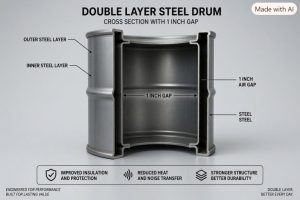
Packaging was central to the assessment of this spent catalyst shipping. The catalysts were to be packed in specially designed double-layer steel drums, with water between the two layers acting as a cushioning medium.
The reasoning was practical. Sea transport brings vibration, movement and loading impact, and similar stresses occur during container handling, unloading and road transport. A heavy knock can shift the material inside a drum, and disturbance or friction could contribute to heat generation or the release of residues. A damaged drum could also let hazardous dust escape.
The double-layer design added physical protection, while the water-filled gap was meant to absorb shock. One caution matters here: water is not automatically suitable for every spent catalyst. In any spent catalyst shipping, its use must be backed by chemical compatibility information and proper technical assessment. For this shipment, the packaging was agreed as part of a specific safety plan.
The goal was simple: minimise physical damage, limit movement of the material and keep the packaging intact for the whole journey. That is the standard we expect of any spent catalyst shipping we are asked to underwrite.
Police Escort and Route Planning for Spent Catalyst Shipping
The Road Journey: Singapore PSA to Pengerang
After the sea leg, attention turned to the final road transport. The container would arrive at the Port of Singapore Authority (PSA) area and then travel by road to Pengerang in Johor.
The distance was relatively short, but the nature of the spent catalyst cargo demanded extra care. An accident involving hazardous industrial material could endanger other motorists, emergency responders and nearby communities.
We arranged the following controls:
- Night-time movement: from 11 pm to 7 am, when traffic is generally lighter
- Police escort: two patrol vehicles, one ahead of the container truck and one behind
- Tracking devices: installed to monitor the truck’s location throughout the trip
Together, these measures reduced exposure to traffic-related incidents and allowed closer monitoring of the cargo.

A High-Risk Underwriting Decision
What made this assignment especially interesting was the decision behind it. The regional office had originally submitted the request, but the head office underwriter had declined the risk because of the cargo’s nature and potential hazards.
I did not know about that earlier rejection when I received the assignment. I assessed the information available, addressed the safety requirements and proceeded.
Months later, over lunch, the regional manager told me he was surprised I had accepted it. He explained that head office had already said no, but he also recognised my qualifications and long experience with chemical and industrial cargo.
The lesson is that dangerous goods underwriting is not about accepting or rejecting a proposal based on the cargo description alone. It takes technical knowledge, practical experience and the ability to identify what extra information and precautions are needed. But professional confidence must never replace proper risk assessment. Experience is only valuable when supported by reliable information and appropriate safety controls.
Six Lessons for Marine Cargo Insurance
1. Understand the actual nature of the spent catalyst shipment. A description is not enough. Spent catalysts differ depending on their previous use, so chemical specifications and safety data are essential.
2. Engage an experienced freight forwarder. Dangerous goods transport needs specialist knowledge of classification, documentation, packaging and handling.
3. Never underestimate packaging. It must suit the chemical properties of the spent catalyst shipment and the journey. Here, double-layer steel drums formed part of the agreed protection.
4. Consider the entire journey. Risk assessment should not stop at the port of discharge. The inland leg from Singapore PSA to Pengerang was a significant exposure that needed its own arrangements.
5. Use monitoring and security measures. Night-time transport, police escort and tracking complemented the precautions taken at the packing and shipping stages.
6. Decide on evidence. A high-risk cargo does not have to be declined automatically, but acceptance should follow proper technical assessment, satisfactory documentation, regulatory compliance and appropriate risk mitigation.
The Outcome: Completed Without Incident
The shipment reached its destination without incident. What began as a 6 pm email grew into a detailed underwriting exercise covering chemical specifications, specialist forwarding, protective packaging and controlled inland transport. Every stage from the United States through Singapore PSA to Pengerang required careful coordination.
For me, the case reinforced a core principle: underwriting dangerous goods is not about filling in forms or relying on standard cargo descriptions. It is about understanding what can happen to the material in real transport conditions. What if a drum is dropped? What if the container experiences excessive movement? Could residues generate heat or release hazardous gases? Are the packaging and transport arrangements right for this particular material?
Those are the questions an underwriter should ask before accepting a challenging spent catalyst shipment risk. The oil and gas industry depends on specialised catalysts, and once spent, they require recovery, recycling or disposal through appropriate facilities. Moving them must be managed responsibly.
At YESNOCLAIM, we believe good underwriting begins with asking the right questions. A difficult risk deserves careful investigation, not simply an automatic yes or no.